Elewana Sand River Masai Mara
Elewana Sand River Masai Mara
Elewana Sand River Masai Mara is one of Kenya’s most classic luxury tented safari camps, located on the banks of the Sand River in the southern part of the Maasai Mara National Reserve, close to the Tanzania border and the northern Serengeti ecosystem. It is operated by Elewana Collection and is designed around the atmosphere of the grand early 20th-century African safari camps.
1. Location & Setting
Sand River’s greatest advantage is its wild, secluded position.
-
Situated beside the Sand River, with views of sandy riverbanks, rocky outcrops and riverine forest.
-
Located in the southern Maasai Mara, near the Serengeti border.
-
Positioned on the route used by migrating wildebeest and zebra during the Great Migration season.
-
The area is particularly strong for:
-
Lions
-
Leopards
-
Cheetahs
-
Elephants
-
Hippos
-
Crocodiles
-
Large herds of plains game
-
The camp’s riverside location creates one of its signature experiences: sitting on your veranda or dining area while watching wildlife move through the landscape.
2. Camp Design & Atmosphere
Sand River is built as a permanent luxury tented camp, inspired by the classic safari camps of the 1920s. It aims for an elegant, nostalgic “Out of Africa” style rather than a modern lodge feel.
The atmosphere is:
-
Colonial safari elegance
-
Leather, wood and canvas interiors
-
Quiet and intimate
-
More “explorer’s camp” than contemporary resort
It avoids the feeling of a large hotel. The emphasis is on:
-
Privacy
-
Personal service
-
Wildlife immersion
-
Classic safari romance
3. Accommodation
The camp has 16 tented accommodations.
Standard Safari Tents
There are:
-
15 tented rooms
-
4 twin tents
-
11 double tents
-
-
Approximate size: 49 m² each
Features typically include:
-
Spacious bedroom area
-
En-suite bathroom
-
Hot showers
-
Dressing area
-
Private veranda
-
Classic safari furnishings
Family Tent
The family accommodation includes:
-
Two en-suite bedrooms
-
Shared central lounge
-
Approximately 87 m²
Suitable for:
-
Families
-
Two-generation safari trips
-
Friends travelling together
4. The Two Camp Areas
Sand River is divided into two sections:
Main Sand River Camp
-
10 tents
-
Main dining and lounge facilities
Little Sand River
-
6 tents
-
More intimate atmosphere
Each area has its own common spaces, helping maintain a private camp feeling.
5. Safari Experience
Game Drives
Included activities generally include:
-
Morning game drives
-
Afternoon/evening game drives
-
Custom-built 4x4 safari vehicles
-
Professional guides
Private vehicle hire is available for guests wanting a dedicated vehicle and guide.
Wildlife Strengths
The Mara is one of Africa’s best big-cat destinations.
Expect possibilities of:
Lions
Excellent opportunities, especially around open grasslands and river areas.
Leopards
The Mara-Sand River region can produce excellent leopard sightings.
Cheetahs
The open plains are ideal habitat.
Migration Season
During approximately July–October, guests may witness:
-
Wildebeest herds
-
Zebra movements
-
River crossings (depending on timing and conditions)
Sand River’s position on migration routes is a major attraction.
6. Dining
Dining is designed around the classic safari style:
Typical experiences include:
-
Breakfast after game drives
-
Lunch overlooking the river
-
Afternoon tea
-
Bush breakfasts
-
Sundowners
-
Candlelit dinners
The style is generally refined but relaxed rather than formal.
Guest reviews frequently highlight the food quality and personalized service.
7. Facilities
Facilities include:
-
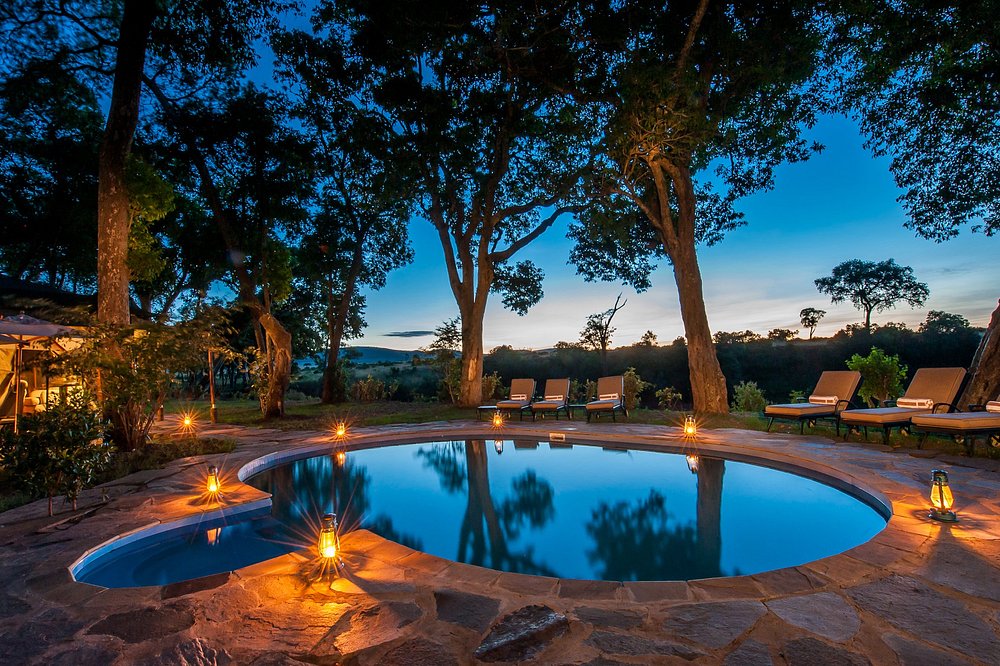
Swimming pool
-
Lounge/bar area
-
Dining areas
-
Bush dining locations
-
Safari vehicle facilities
Unlike a beach resort or city hotel, facilities are intentionally limited to preserve the safari atmosphere.
8. Activities Beyond Game Drives
Available experiences include:
Balloon Safari
A sunrise hot-air balloon flight over the Mara plains (usually booked separately).
Bush Meals
Breakfasts and dinners in special wilderness locations.
Sundowners
Classic African safari tradition:
-
Drinks
-
Snacks
-
Sunset views
Cultural Experiences
Visits to local communities or conservation-supported projects may be arranged.
9. Getting There
Most visitors fly from Nairobi.
Typical route:
Nairobi Wilson Airport → Maasai Mara airstrip → Camp transfer
Elewana lists flights via operators such as Safarilink and Air Kenya, with transfers from nearby airstrips such as Keekorok.
Approximate journey:
-
Flight: ~45 minutes
-
Road transfer: ~45 minutes (depending on airstrip and conditions)
10. Best Time to Visit
January–March
Excellent
-
Green landscapes
-
Good predator viewing
-
Fewer visitors
July–October
Peak season
-
Great Migration period
-
Highest demand
-
More vehicles around famous crossing areas
November–December
Very good
-
Short rains bring fresh vegetation
-
Good photography conditions
11. Strengths
Exceptional location
The riverside setting is one of the camp’s biggest advantages.
Classic safari atmosphere
Ideal for travelers who want:
-
Canvas tents
-
Campfire evenings
-
Traditional safari romance
Strong wildlife viewing
The southern Mara offers excellent year-round game.
Personal service
The small size allows a more individualized experience. Guest reviews commonly praise staff attention and guiding.