Satao Camp
Satao Camp
Satao Camp is one of Kenya's best-known classic safari camps, located deep inside Tsavo East National Park. It is renowned for its authentic tented safari experience, abundant wildlife, and a natural waterhole that attracts animals throughout the day, allowing guests to observe wildlife directly from the camp.
For official information, bookings, and current rates, visit Satao Camp.
Location
Satao Camp is situated approximately:
-
330 km from Nairobi (about 5–6 hours by road)
-
170 km from Mombasa (about 3 hours by road)
-
Around 45 minutes' drive from Voi Gate within Tsavo East National Park
The camp is surrounded by acacia woodland and tamarind trees, providing natural shade and an excellent habitat for birds and wildlife.
History
Satao Camp has operated for several decades and is owned by Southern Cross Safaris, one of Kenya's long-established safari companies. The camp was designed to offer an "Out of Africa" safari atmosphere while maintaining minimal environmental impact within Tsavo East.
Accommodation
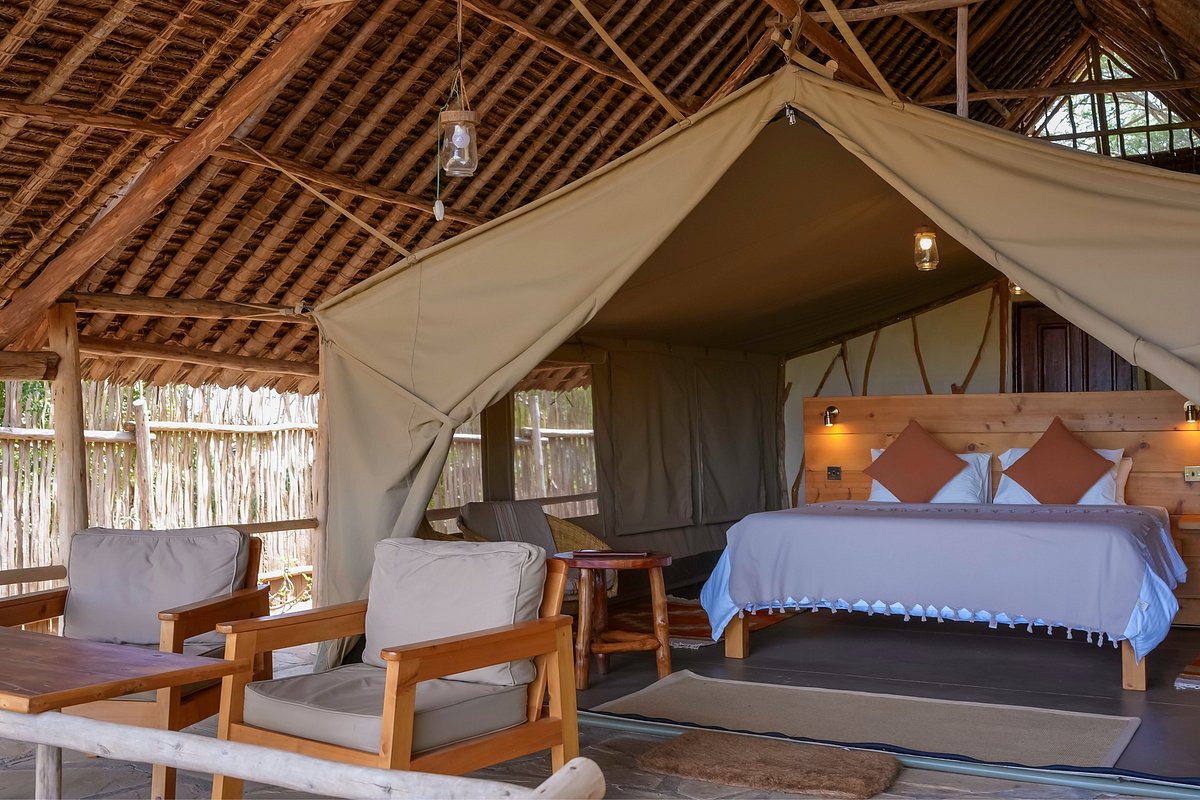
The camp features approximately 20 luxury canvas tents, including:
-
Standard tents
-
Family suites
-
Honeymoon suites
Each tent includes:
-
En-suite bathroom
-
Hot shower
-
Flush toilet
-
Mosquito netting
-
Comfortable beds
-
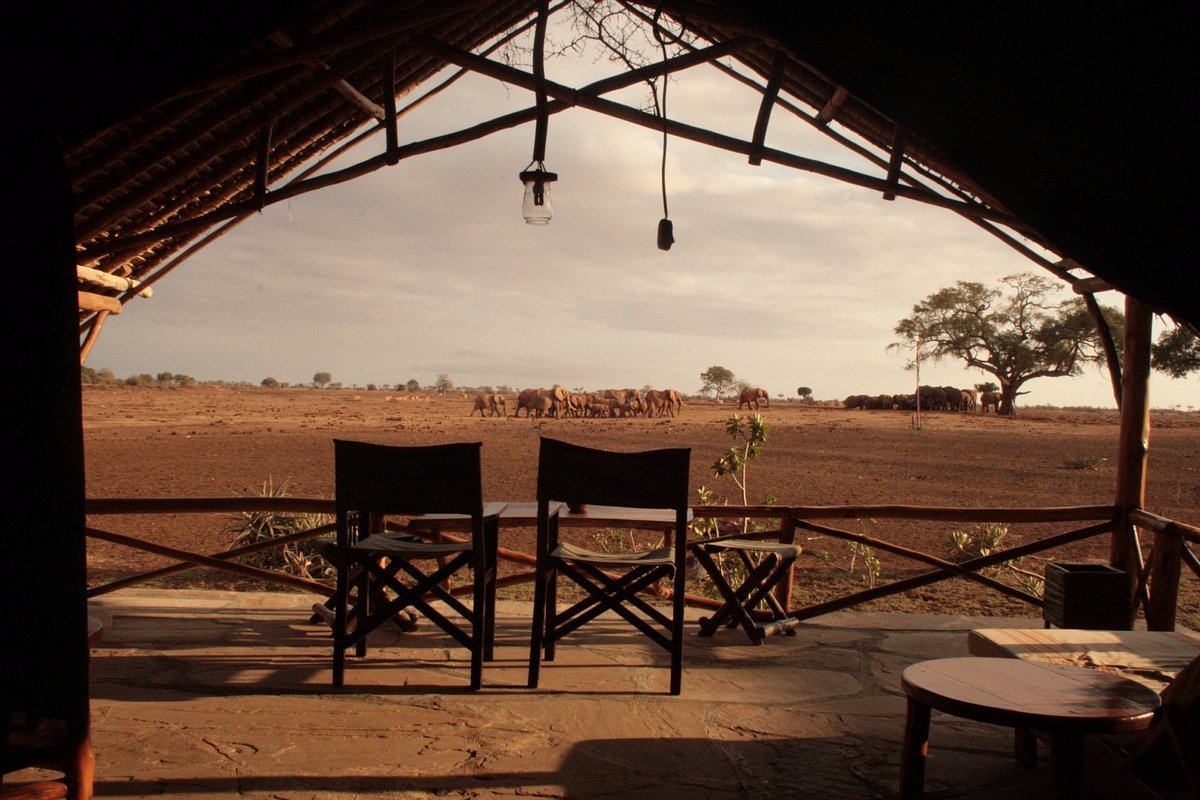
Private veranda overlooking the waterhole
-
Solar-powered lighting
The tents are widely spaced to provide privacy while maximizing wildlife viewing opportunities. Accessible accommodation is also available for guests with disabilities.
The Famous Waterhole
The camp's defining feature is its large waterhole.
During the dry season, it attracts:
-
Hundreds of elephants
-
Buffalo
-
Zebras
-
Giraffes
-
Warthogs
-
Waterbuck
-
Various antelope species
-
Lions (occasionally)
-
Leopards (occasionally)
Camp staff help maintain the waterhole to ensure it remains a reliable water source for wildlife throughout the year. On particularly busy days, very large numbers of elephants may visit.
Wildlife
Tsavo East is famous for its:
-
Red elephants (their reddish appearance comes from dust bathing in iron-rich soil)
-
Lions
-
Leopards
-
Cheetahs
-
African buffalo
-
Masai giraffes
-
Zebras
-
Lesser kudu
-
Oryx
-
Dik-dik
-
Hyenas
-
Jackals
Although all members of the Big Five are found in Tsavo East, rhinoceroses are extremely rare in the park.
Birdlife
The area is a paradise for bird enthusiasts.
More than 300–500 bird species have been recorded, including:
-
Hornbills
-
Bee-eaters
-
Starlings
-
Vultures
-
Eagles
-
Secretary birds
-
Ostriches
-
Kingfishers
-
Rollers
-
Owls
Migratory species are commonly seen between October and April.
Safari Activities
Guests can enjoy:
-
Morning game drives
-
Afternoon game drives
-
Full-day safaris
-
Sundowner experiences
-
Birdwatching
-
Wildlife photography
-
Bush breakfasts (subject to booking)
Experienced guides use open-sided safari vehicles that provide excellent visibility for photography and wildlife viewing.
Nearby Attractions
Popular destinations accessible from Satao Camp include:
-
Mudanda Rock – a massive rock formation overlooking a seasonal dam frequented by elephants.
-
Lugard Falls – scenic rapids and eroded rock formations along the Galana River.
-
Yatta Plateau – one of the world's longest lava flows, stretching roughly 290 km.
-
Galana River – the park's main permanent river and an important wildlife corridor.
Dining
Meals are typically served buffet-style and feature:
-
Fresh Kenyan produce
-
International cuisine
-
Vegetarian options
-
Special dietary meals on request
Evenings often conclude around the campfire, where guests can relax while listening to the sounds of the surrounding wilderness.
Sustainability
The camp incorporates several environmentally conscious practices:
-
Solar energy for much of its power
-
Responsible water management
-
Support for wildlife conservation
-
Minimal-impact safari operations
Its maintained waterhole also contributes to sustaining wildlife during dry periods.
Best Time to Visit
June–October
-
Dry season
-
Excellent wildlife viewing
-
Animals gather around water sources
-
Cooler temperatures
January–March
-
Another dry period with strong game viewing
-
Good for photography
November–December
-
Short rains
-
Lush scenery
-
Excellent birdwatching
April–May
-
Long rains
-
Fewer visitors
-
Some roads may become difficult to access.
Advantages
-
Excellent wildlife viewing directly from camp
-
Authentic tented safari experience
-
Spacious accommodation
-
Quiet location within Tsavo East
-
Outstanding elephant sightings
-
Rich birdlife
-
Experienced safari guides
Considerations
-
The camp is remote, with limited mobile connectivity in some areas.
-
Wildlife sightings are never guaranteed and vary by season.
-
Temperatures can be very warm during the day, particularly from December to March.
Who It Is Best For
Satao Camp is especially well suited to:
-
Wildlife photographers
-
Couples
-
Families
-
Birdwatchers
-
First-time safari visitors seeking a classic Kenyan safari
-
Travelers looking for a quieter alternative to more heavily visited safari destinations